Sunset Planning Services: End-of-life planning and executor support

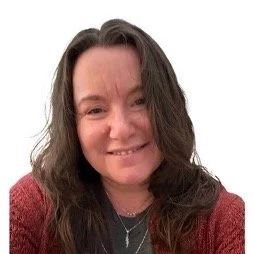
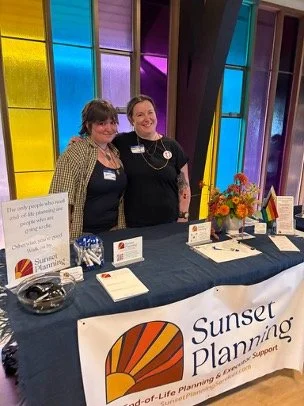
Monica Welty owns Portland based Sunset Planning Services and supports end of life planning and offers executor support. This blog provides a Q&A between Life-cycle Celebrant Katie Melville and Monica Welty about end of life services, executor support, and ritual.
Q&A:
What is your business? I work with people to create a comprehensive end-of-life plans and I support people navigating the complicated job of being an executor (the person in charge of taking care of someone’s estate aka all of their things!).
What types of services do you provide?
I work with individuals, couples and small groups of people to create end of life plans that go beyond the will. Working together makes the planning process, which is usually dull and tedious, a little easier by doing it in community. I also support and guide people who are in charge of closing a loved one’s estate through that often lengthy and challenging process.
For planning, we will get you prepared to create your will online or with a lawyer, talking through the more emotional and personal aspects like who should make medical decisions for you if you can’t at some point, who should care for your kids or pets after you die and what type of medical and emotional support you want at the end of your life.
Oddly, the most fun part is funeral planning! With as much detail as you want, we craft a memorial plan so that your loved ones don’t have to literally do event planning in their early days of grief when they just need to be together and rest. We talk about your favorite music and poems or passages to include, food you might want served, decorations, even the location and who will officiate.
We create secure systems to organize important documents and information, both digitally and physically.. This helps you to easily find medical information, account and subscription lists, and important contacts with ease during your daily life and takes a huge burden off the person who will handle closing up all of your things after you die. No searching for passwords or retirement accounts from three jobs ago!
We also do the important work of legacy building. What mark do you want to leave on your closest people, your community, the world? What are your values and how do you live them? Do you have heartfelt goals, projects or adventures that you want to complete before you die? I help you plan and get started on all of that.
If you find yourself as the executor of someone’s estate, I guide and support you through that often lengthy, complicated and frustrating process. Most people in charge of an estate were close to the person who died. So, while you are grieving and in shock, you must also go to their bank and fill out forms to gain access to their financial life, make phone calls to government agencies, utility companies and to cancel their hair cut or eye appointment that start. I have information or do research for you that you otherwise would have to find and figure out on your own. There is a lot of legal, financial and medical jargon to decipher that I can help translate. There are things that are best done in a certain order like when to contact the social security administration versus the credit bureaus versus set up estate bank accounts that I can help prioritize. There are often a lot of digital accounts and personal belongings that need to be closed, managed, or given away that I help organize and implement with you. I also can help navigate the overwhelm of grief while dealing with logistics, be a person who is cheering you on even if it’s because you took a few weeks off just to tend to your own life and your own heart and I can help keep things moving so that the process doesn’t have to take one day longer than necessary.
How did you choose your business name? After my dad died, friends sent me to an overnight at the beach by myself and I sat watching this brilliant, burning orange sun set over the vast ocean and felt how deeply alone I was now without him. I felt how strange it was that the sun would still set, the waves would still wash up every single day, even though my world was so deeply altered. I also felt how held and connected I was, by my family and friends, my community, the ocean and the sky. How much of him, his advice and counsel and love, I was taking forward with me into this new life without him. I felt how not alone at all I was in my grief and my love. The sun set on that day and, in a lot of ways, it began the next chapter of my life. I thought “Even the end is beautiful”.
Months after finishing my executor work, I was in death doula school and the idea for my business came to me. One of the first people I told about it had recently started their own business with the word “Sunrise” in it. He was so encouraging and supportive, I thought it would be a small tribute to him, encompass my experience that night on the beach, and symbolize the beauty we can find, even when things are ending. Even, maybe and hopefully, our own lives.
Who would benefit from your business? When should someone contact you?
Anyone who is going to die can benefit! And contact me as soon as possible! I say that to be silly but it’s also true!
Anyone who doesn’t have a will or a plan already can benefit. We often imagine that if we don’t own a home or have a million dollars that we don’t need to do estate planning. But if you have a bank account, you have an estate, no matter how much is in there. If you rent, have a car, have a pet, have belongings, use credit cards- all of that is part of your estate. If you die, there is so much that needs to be managed, closed and dealt with. We also imagine that we don’t need end-of-life planning unless we are old, ill or dying. But the hard truth is, that people die and get diagnosed with life altering conditions at all ages. A plan is so important to have throughout our whole lives in case the worst does happen to us. People also think that a will is enough. If you have one you are way ahead of the game! But there is also so much more to plan and organize beyond the legal documents to make the lives of your loved ones so much easier after you pass.
People who worry about what will happen to their things, the people and animals they care about, that they might be forgotten or not have made an impact on the world can benefit from planning. Creating a plan can really reduce anxiety about all of these things. It frees up space for you to spend time with those you love without that worry in the background, it helps you enjoy the things you have acquired to make your life more fun and easy, it helps you live your life with the impact you want to have on others.
If you want to care for your loved ones, even after you die, planning is for you. It is a huge gift, your final act of love, for those you leave behind because a plan affords them time to grieve and be together instead of searching for the password for your computer or trying to figure out where to get your dog’s prescription when it runs out.
Anyone who loses a loved one and becomes an executor (the person in charge of closing an estate) and needs some support in organizing and prioritizing their tasks, in doing research for their particular circumstance, who doesn’t want to start from scratch finding the resources and professionals they need and who wants someone to talk through important decisions and support them on staying with this emotionally charged and tedious work can benefit from working with me.
What brought you to this work?
Being my dad’s executor was very eye opening. He was pretty well organized and it still took a year and half to truly settle his affairs. It was a essentially part time job, on top of grieving, single parenting, working full time and flying back and forth to New York where he’d lived. There was a lot of the accountant saying “Have you talked to the lawyer about that?” and then the lawyer saying, “Yes, I can help you with that. Did the accountant give you the form we need?” and then back to the accountant I go. I talked to no less than a dozen people at the electric and gas company to figure out some three year long glitch in his account that had to be fixed before I could transfer services of the new owner of his house. It went on like this for months. I kept thinking “I”m not the first person to do this. Why isn’t there a system to follow? I need someone to hold my hand through this.”
After that process, I didn’t want my kid or family to be left with so much to deal with after I die, so I started my own planning process. My lawyer said, “The only people your age (I was 45) who do this are people who know what it’s like after someone dies to deal with their stuff.” So, during death doula school, when we got to the paperwork and planning units, it came to me that I could be that person for others. Not only through executor work but by helping plan ahead so that their executor’s experience could be less of a burden and more of the honor that it truly is.
What is important about the work you provide?
It’s two fold: getting organized and expressing your wishes is a huge gift to yourself and your loved one.
Secondly, though our culture strongly disagrees, planning for end-of-life, thinking about your own death and what happens to those you leave behind, can bring a new depth and meaning to your life.
The work of planning for the end-of-life deepens your relationships. As you move through planning, you get to know yourself better. You learn to fall more in love with your life. You discover that you appreciate and notice the small stuff, the details around you. You begin to live more truly to your values, interests and passions.. This is not always easy or fun. It often requires deep soul-searching and reevaluation of what and who you are currently engaged with. And it is worth it.
It also can deepen your relationships with your loved ones. Just like we don’t live our lives in a vacuum, we don’t die alone, either. We need people to help us if we aren’t able to make financial or medical decisions for ourselves at some point. We need to choose people who we trust and can depend on to care for our kids and pets if they need it after we die. We need someone who will thoughtfully and thoroughly take care of our things after we die. Thinking about the people who might do this for us helps us consider who is in our life, what kind of people we want to bring into our lives, which are the relationships that we want to foster and develop more. Again, this is not always easy or fun and requires some hard conversations. And again, it’s worth it for the richness and meaning that it brings to our lives.
While often considered morbid, planning helps us get used to the idea that this is all temporary. I might die today. Some days, I’m going to step away from my computer for the afternoon and go paddleboarding with my kid, knowing that I can come back to work in the evening, so that I don’t miss out on this limited experience. It helps us live in the paradox of “Live your life as if it’s your last.” and the doldrums of daily life and the need to make future plans.
How does someone choose your business?
Often people who choose my business are people who need help getting things like this done. It’s been at the back of their mind but they easily put it off. They are people who do hard and tedious things better when they are working with others. They often aren’t self starters or find their lives so full that they don’t get to longer term things like planning until there is some structure around it. Some people have a great plan already but want to talk through a few things or just need advice on their organizational system. Just like my lawyer said, they are people who have gone through being an executor and understand the overwhelming scope of that and don’t want to place that burden on their loved one. I truly think working with me can benefit anyone because there is so much that can go into planning that we don’t always consider on our own.
What is your approach when working with your clients?
I try to meet each person where they are. I was trained as a life coach, a death doula and have worked as a massage therapist for 20 years. All of these have taught me to listen really well, get to know people and I learn about what they need. This can be heavy stuff so I bring humor, levity and joy into every session, even if it’s just commiserating on how frustrating the bureaucracy of it all is. I focus on getting things done but also being mindful that the process can be emotionally challenging and make time for that, too. I also connect people with resources and professionals (lawyers, financial advisors, and grief support, for example) that allow them to feel fully supported.
My program spans three months and, depending on how much planning you want to do, requires 3-6 hours of time set aside per week, including the hour session with me and a weekly “coworking” hour, where clients can come to just get some work done or ask questions or both. I provide comprehensive notes, summaries of decisions made, and a task tracker so nothing that needs to be done gets lost. I also offer quick questions and support via email or text throughout the three months. I ask clients to think of this almost as taking a class, to look ahead and see when you might have a few extra hours a week to dedicate to this work and schedule it out. This is the best approach I’ve found to really getting a sold plan together.
For executors, it averages a year, with the first three to six months being weekly meetings and lots of support in between. As we get a lot of the big stuff managed and closed, the second three to six months are used for less urgent aspects of life, usually like subscriptions, canceling phone service and things like that. This time span also allows for weeks at a time of taking breaks from doing this hard work, allowing time to grieve and get back to creating whatever the new normal is for your life.
How do you support caregivers and family members who have recently lost someone?
Executor support is actually a unique place to support people who are newly grieving. Many people feel helpless and taking care of their loved one’s things can feel like a way to continue to care for them. By being a part of that process, I can smooth out some of the bumps in that road to make it more meaningful than burdensome. I can be someone to vent to about the frustrating parts and check in over many months to make sure they are feeling supported in their grief over time and help them find more or different support if they need.
Talk to me about grief and how you support those throughout the grief process.
While not my exact expertise, I have had a lot of loss and grief in my life, including my son Harvey who died as a newborn, so I am very comfortable with grief and with dying. I understand it as the hardest thing that we can experience as humans and also that, as humans, we will make meaning of it, eventually and over the long term. Grief, which can also include other emotions like anger and betrayal, needs space and attention and our culture does not always allow for that. Grievers have to learn a new language, a new way of being, and I’ve been learning that for myself for over a decade now, so often it is a comfort just to not be subject to things people say who don’t get it and have someone there who will ask questions about their person and acknowledge the complexity of how they are feeling. I lean in with people instead of trying to separate myself and my life from their grief. I hope to be someone who is holding a light that says “You can do this. There’s a way through. You’re not alone.”
What do you think is important about death rituals?
There is so much important about death rituals and I wish we had more of them! We are so often losing something, even when we are gaining something else. Grief is as ubiquitous as love and joy and happiness. I wish we acknowledged death in happy rituals we have like weddings and new babies and graduations. Death rituals acknowledge and allow us to have a full and complete human experience. They help us get comfortable with things that feel hard. We have some, not enough!, rituals in our culture when a person dies, such as a funeral but then what? What about when the dream of that dream job dies when you get the rejection letter? What about when the friendship you thought would last a lifetime piddles out? What about six months, 74 weeks, 32 years after the loss of someone that you can’t live without? They are still gone. You are still living without them? Where are the rituals that support us then?
Contact Sunset Planning Services
monica@sunsetplanningservices.com
Additional Resources
My teacher, Alua Arthur, speaks about death and how it helps us live a fuller life. When I found her, I couldn’t believe there was someone who felt the way I did AND teaches about it. She is an incredible guide and thought leader.
https://www.ted.com/talks/alua_arthur_why_thinking_about_death_helps_you_live_a_better_life